
Andrew Do

Korea D2C Platform Requirements

Structuring commerce, CMS, CRM and integration scope into an auditable delivery record.

Outcome

Requirements, solution design and testing completed

Period
2025
Role
Requirements and area-UAT lead
State
cancelled
Systems
Adobe Commerce · AEM · BFF · Salesforce

The market platform context and its ownership gates.

Public Korean glo desktop product page used as market platform contextPublic Korean glo mobile storefront shown within a phone frame
Public Korea storefront surfaces used to ground market requirements and UAT context. They are not presented as output from the separate D2C programme, which was later cancelled for a business reason.
  1. Business requirements (External approval gate)
  2. BRD / FRD and feature mapping — Andrew-led analysis (Andrew led)
  3. Architecture and event-flow alignment — Shared reviews (Shared ownership)
  4. Engineering backlog — Vendor-owned (Partner-owned delivery)
  5. Area UAT — Andrew-led checks (Andrew led)
  6. Completed design and test record — Parity complete (Partner-owned delivery)
  7. Business-level cancellation — Market decision (External approval gate)

Making the platform legible to market teams.

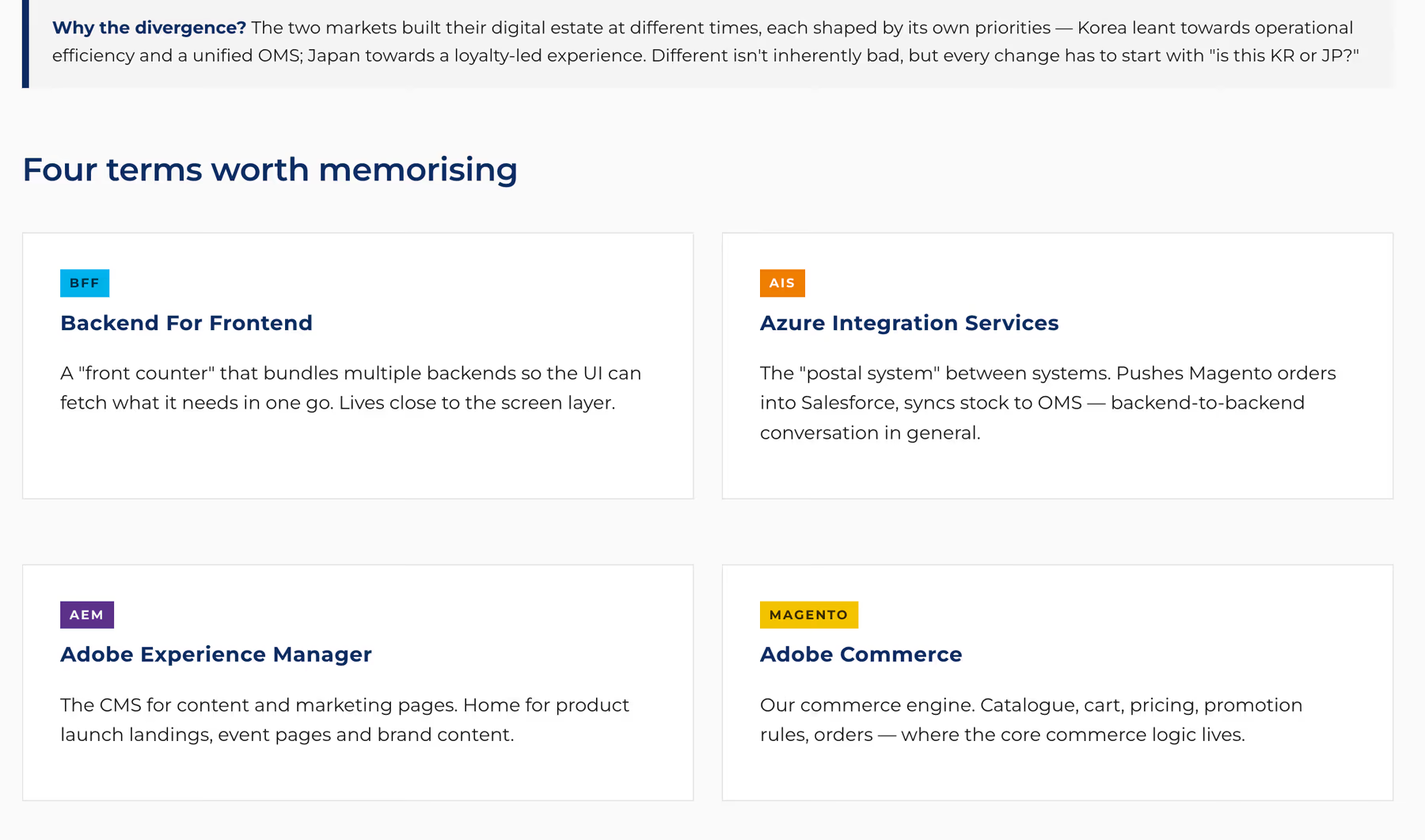
Excerpt from Andrew's training material explaining BFF, Azure Integration Services, AEM and Adobe Commerce

An excerpt from training material Andrew designed to give marketing stakeholders a shared, practical language for the Korea and Japan platform architecture.

Open full-size excerpt

Situation and constraints

Multiple partners needed a buildable cross-system specification from fragmented market requirements.

Aligned various stakeholders to produce structured scope and sequence integration dependencies.

From constraint to result

Constraint

Multiple partners needed a buildable cross-system specification from fragmented market requirements.

Decision

Structured fragmented commerce, CMS, CRM and middleware requirements into an auditable delivery record

Why it mattered: Aligned multiple vendors around a buildable cross-system specification.

Result

Requirements, solution design and testing were completed before the programme was cancelled for a separate business reason.

What I owned and moved forward

Andrew owned or led

  • Requirements mapping and business scope translation
  • UAT scenario planning and area testing readiness

Partner or external ownership

  • Engineering implementation and solution architecture
  • Vendor test-plan authorship

Execution actions

  • Mapped business rules to commerce features.
  • Sequenced integration dependencies for commerce, CMS and CRM.

Result and attribution

Outcome and system change

Requirements, solution design and testing were completed before the programme was cancelled for a separate business reason.

My contribution and boundary

Structured commerce, CMS, CRM, BFF and Salesforce integration requirements and owned testing readiness.